Skip to content

A product is manufactured, packed, and delivered. People open the surrounding box made with paper, plastic, PVC, or wood, take out the product, and leave the packaging there. Have you ever wondered what your customers do to their product packaging boxes? They tear it apart and leave it there, increasing landfill waste. It is very dangerous, as climate change and pollution are severely affecting the Earth. The ratio of natural disasters is dramatically increasing and causing billions of dollars in damage and loss of precious human lives yearly. To control the situation and minimize environmental impact, you have to learn to be smart about your product packaging choices. It is your responsibility to use sustainable packaging, learn how to dispose of it properly, and share this information with your customers so they can do the same. In short, it is our responsibility as a brand, business, and individual to use and dispose of packaging carefully and make every decision with an eco-conscious mindset to better the natural environment.
Why Does Your Packaging Matter? – The Unseen Journey
What is packaging? Is it just a container that surrounds your expensive gift or product, or something better than this? A packaging box is a guarantee of your product’s preservation, brand elevation, and sophisticated gift presentation, helping attract more and more customers. But what about after the use of any kind of packaging, because it is one of the most prominent reasons our land and oceans are getting polluted? According to the latest research, millions of tons of packaging waste are produced worldwide every year. Among the great contributors to this packaging waste are e-commerce businesses. These businesses are simply becoming a burden on landfills and on the environment.
The packaging industry is simply producing single-use packaging, and this is kind of horrifying. Depletion of natural resources, carbon emissions, and energy consumption are due to poor packaging choices of e-commerce businesses and retail manufacturers. This is why, as a brand or product manufacturer, you should make smart, green, reusable, and eco-friendly packaging choices. It is your responsibility to learn how to dispose of packaging properly or choose sustainable packaging options.
How to Dispose of Boxes Properly Without Compromising the Process?
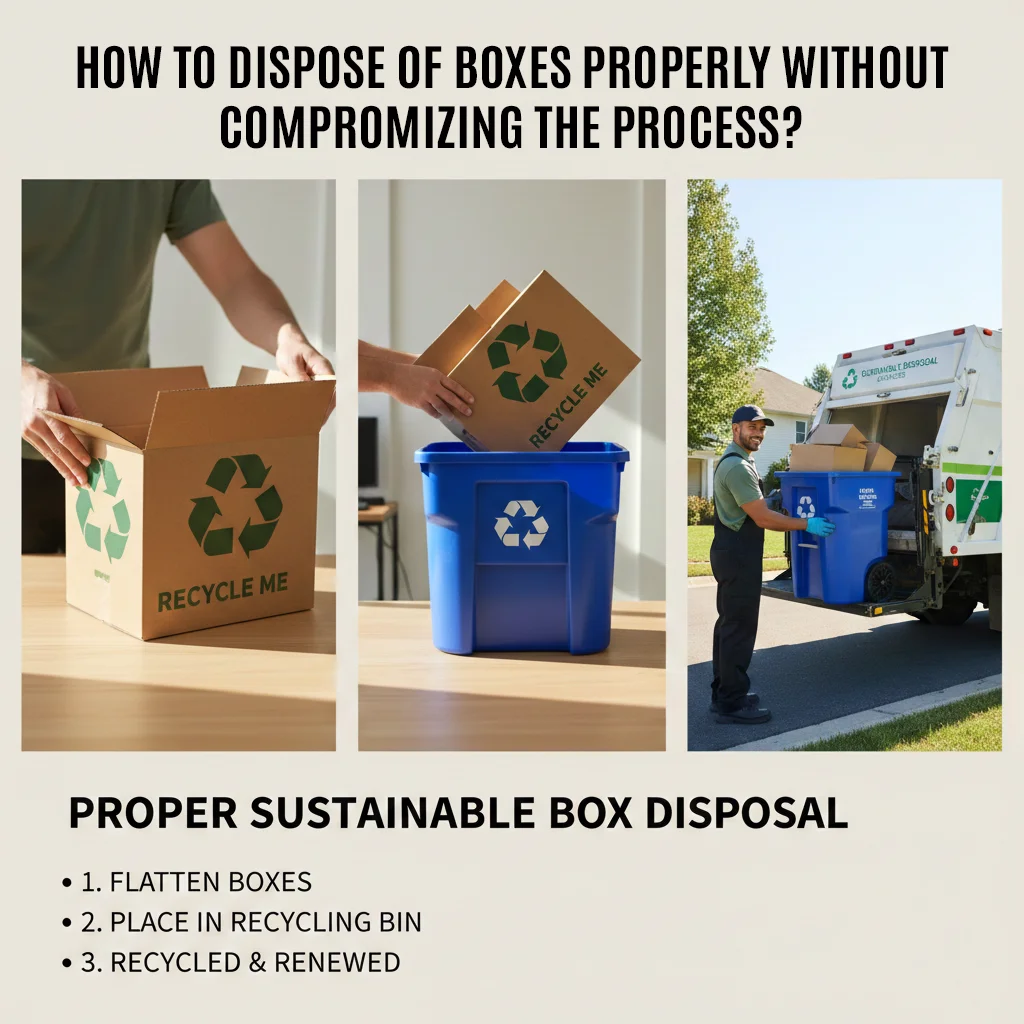
Promoting recycling and reducing waste is essential, and only you can do this properly by learning how to properly dispose of packaging materials. This article will help you to understand the process and manage your packaging possibilities. Here, we will explain a few steps to keep things in order.
Strip it Down
Removing Non-Recyclable Tapes, Shipping Labels, and Plastic Sleeves before you throw your cardboard boxes into the recycling bin is essential. It is vital to remove any non-recyclable materials as well. Shipping labels, plastic sleeves, and tapes can contaminate the entire recycling process, so it is essential to remove them first.
- Tapes – Shipping tapes are made with non-recyclable materials, and it is vital to remove them from every cardboard paper box. You can simply peel them or remove them with a gentle rub.
- Shipping Labels – Labels and stickers are generally coated with inks that are almost impossible to recycle. So, for better disposal results, remove them first using warm water.
- Plastic Sleeves – Plastic sleeves are used to protect the products. You need to remove these sleeves before recycling the whole cardboard box.
The Flattening Rule
Why is breaking down the Box the most important step in logistics? It is one of the simple steps that you can take. One of the most important reasons to flatten your cardboard boxes is that they take up little space in pickup trucks and recycling bins. Compact boxes are easy to transport and require little energy to move. Clumping more often delays the sorting process at the recycling center, and due to flattening, the risk just vanished.
Contamination Check
What can ruin a recycle batch? Grease, food waste, or moisture are the elements that make that happen. You must identify them and get rid of them. Contamination of any kind can ruin the whole batch. So, take care of the food stains, grease, or moisture if you wanna keep the materials recycled. Pizza boxes, take-out packaging solutions, and any food box are common examples.
- Grease – Even a small amount of grease or a stain can ruin the entire recycling process.
- Moisture – Wet or moistened cardboard cannot be recycled because it does not break down properly. So, the cardboard must dry before recycling.
- Food Waste – When the packaging directly contacts the food, the crumbs and leftovers remain on the surface. You must remove them and clean the custom cardboard boxes.
The “Blue Bin” Habit
Recycling varies by area. So, always consider your local regulations about the process. Some places need the blue bin for cardboard and other paper packaging solutions. While the other requires the plastic and metal bins. For proper sorting and to learn about collection schedules, contact the local waste management service.
Make it your habit to dispose of your product packaging boxes. Find the blue bin or other specific bin for paper disposal and put all the waste in it. To do that accurately, follow the appropriate steps.
The Power of Recycled & Bio-degradable Materials to Combat Climate Change
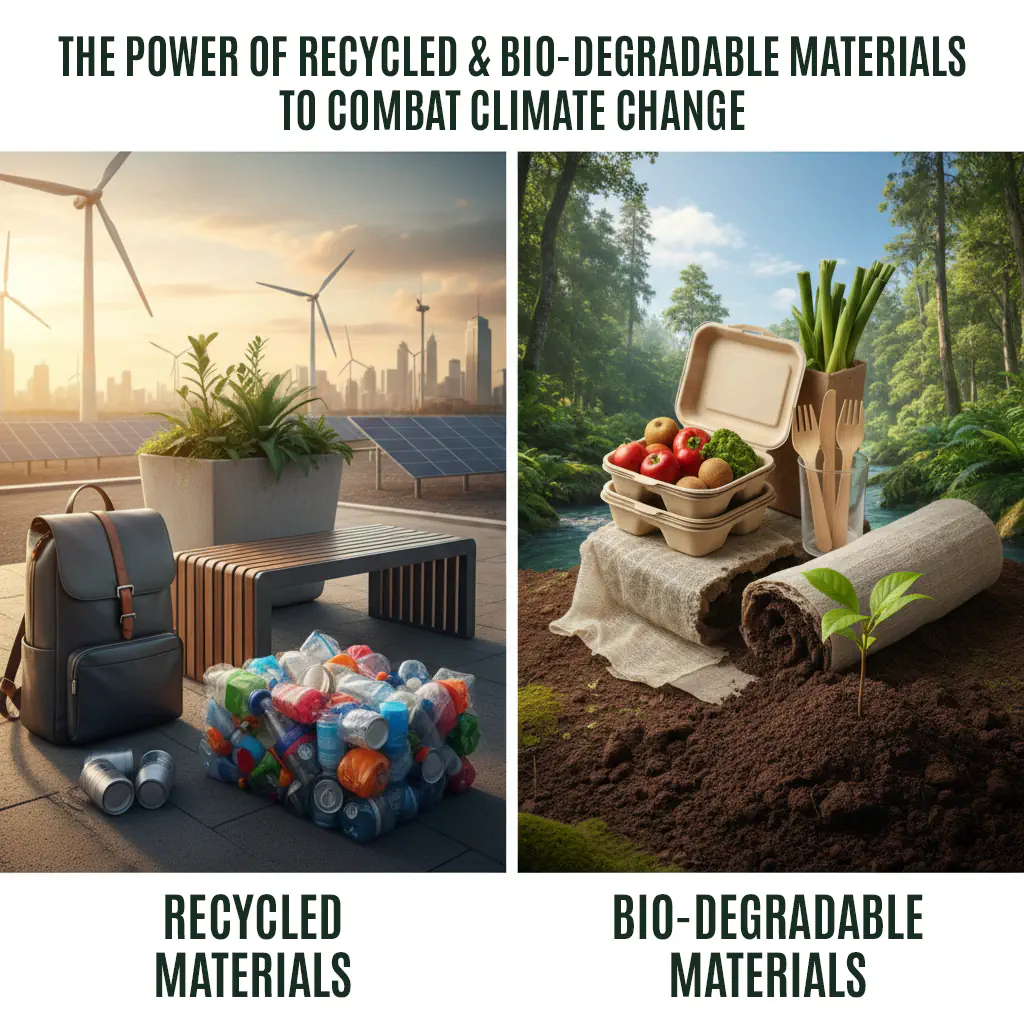
Now, it’s time to keep your packaging choices smart enough to combat climate change and reduce ocean pollution and landfill waste. Material selection is the first step of the process. The right material helps you to reduce the carbon footprint and establish a brand image as eco-conscious.
Bio-degradable Wonders
Packaging that disappears means it can be disposed of is made with cornstarch, mushroom, and seed paper. If you are seeking biodegradable materials with minimal environmental impact, these are your options.
- Cornstarch Packaging – This type of packaging is made with corn-based plastic. It dissolves in water. Also, it can be composted in your backyard bin.
- Mushroom Packaging – Mushroom packaging is made with mycelium. Mycelium is the root system of mushrooms, and packaging made from it can be easily composted and naturally decomposes. This is a great alternative to traditional plastic packaging.
- Seed-Paper – This paper is made from recycled paper and embedded with seeds. After one use, it can be planted to grow flowers and herbs. You can reduce waste and foster biodegradability.
- Other Paper Materials – Beyond cardboard, there are other paper options, such as wood-pulp-based kraft, luxury but recyclable rigid, and biodegradable corrugated. They are perfect for saving the climate.
This is the future of eco-friendly packaging. If you choose these core sustainable or plant-based material options, congratulations; you are actively contributing to reducing landfill waste and improving the planet’s well-being.
The Second Life – Recycled Cardboard
How does recycled cardboard save 17 trees for every ton produced? It is one of the most environmentally friendly and biodegradable materials available for product packaging. Let’s try to understand it from another angle. If you recycle a ton of cardboard and paper material, you can save approximately 17 trees. Recycling of cardboard packaging material uses 40% less energy than producing new cardboard paper from virgin wood pulp. So you can conserve natural resources and reduce carbon emissions. Many companies are now shifting to 100% reusable and recyclable cardboard packaging. This is drastically reducing demand for new materials and minimizing environmental impact.
Compost vs. Recycle – Knowing Which Eco-Materials Can Go in Your Garden

Although it is a fact that composting and recycling are great ways to reduce waste, you need to know the difference between the two. It is key to the responsible disposal of material. Seed-paper and some biodegradable materials are easy to compost at home. You can put them in your garden to enrich the soil. Recycled cardboard materials cannot be recycled at home, so they should be put in the recycling bin.
If you are capable of understanding the real place of every material, then nothing goes to waste. Only in this way can you contribute to a sustainable lifestyle. A little knowledge about materials and their composting can minimize the environmental harm.
Industrial Evolution – Reducing Waste at the Source
As we mentioned before, most of the industry is switching to sustainable packaging, and those who are not can turn their heads towards it. If you are thinking that you can’t do anything to save the natural environment or combat climate change, you are wrong. You are a product consumer and play your part by disposing of packaging, but you can also push industries to do more to combat climate change and adopt sustainable practices.
3 Rs – The Foundation of Sustainable Management System
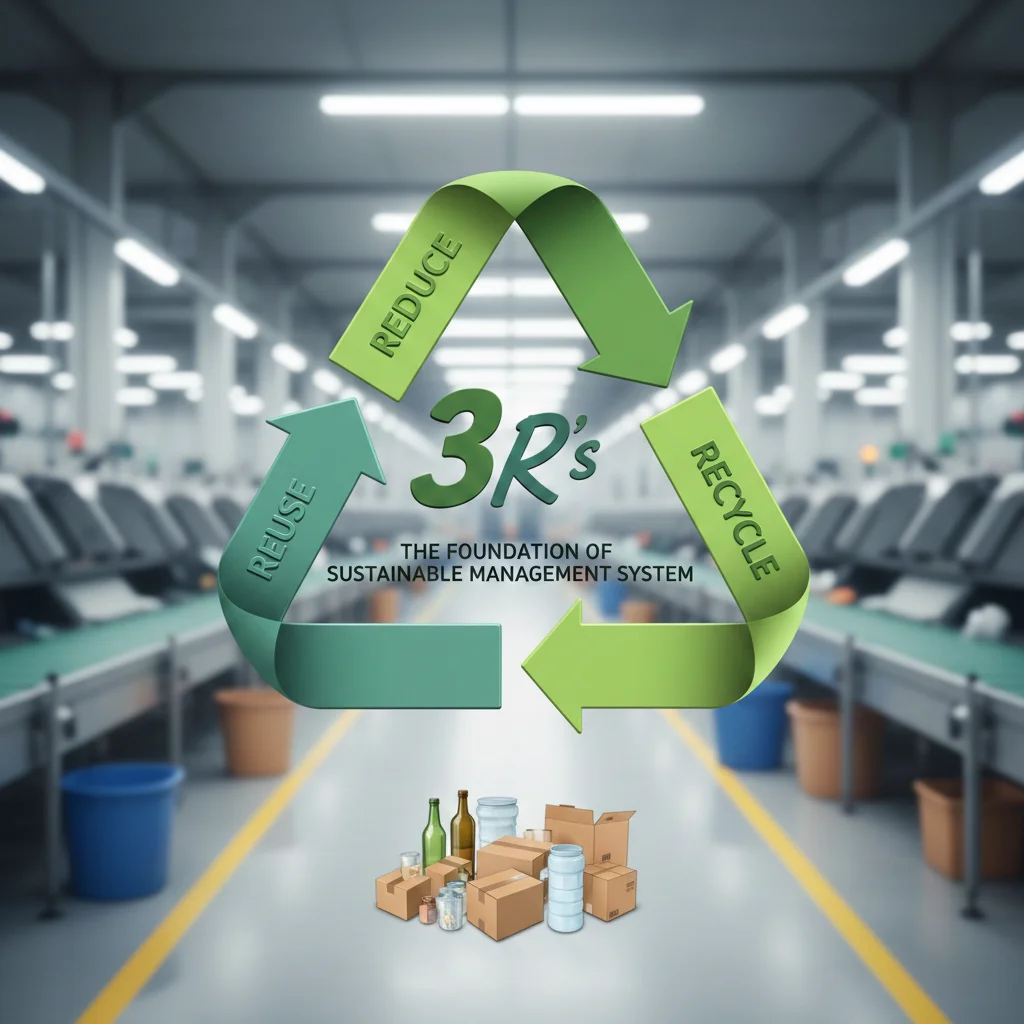
Reduce, reuse, and recycle are the core of any waste management system. The main point is how to implement them in packaging. If you are willing to learn about it, then buckle up.
Reduce
Overall demand for new materials can be reduced by selecting products with minimal packaging. A right-sized product packaging box ensures the usage of only the material required for product preservation. A whole lot of industry is shifting these boxes.
Reuse
Second R is the reuse of product packaging. It extends the packaging life cycle and reduces the need for new materials. Cardboard boxes are a perfect example of reusability. They were used for shipping in their second life.
Recycle
The final step in the packaging lifecycle is recycling. Materials are sent to the recycling centres, where they are repurposed to surround the new products.
Right-Sizing – Using a Small Box for a Small Item is a Win for the Planet
It is one of the simplest ways to reduce packaging waste. Right-sized packaging is the idea that small products don’t need large packaging boxes, which makes sense, too. It reduces the amount of paper used in manufacturing the box. You can save resources, reduce waste, and improve shipping efficiency. Also, it is cost-effective too, so companies are shifting towards right-sizing.
Eco-Inks – Soy and Water-Based Inks That Don’t Leak Toxins
Petroleum-based inks are often used in printing, and they are the traditional inks. They emit toxins that are deadly to the climate. In their comparison, soy and water-based inks are becoming the more popular choices. These inks are non-toxic, biodegradable, and eco-friendly. They are not just harmful to human health but also to the natural environment. You can make your packaging printing more environmentally friendly by using these inks.
Minimalist Design – Using Less Material Without Compromising Product Safety
Minimalist packaging designs use fewer materials to manufacture and other formalities. Industries and brands are moving toward that kind of packaging to combat climate change. This type of packaging approach reduces energy consumption. With environmental preservation and climate control in mind, this design approach makes your product packaging look sober and attractive.
How One Box Saves the Planet? – The Ripple Effect
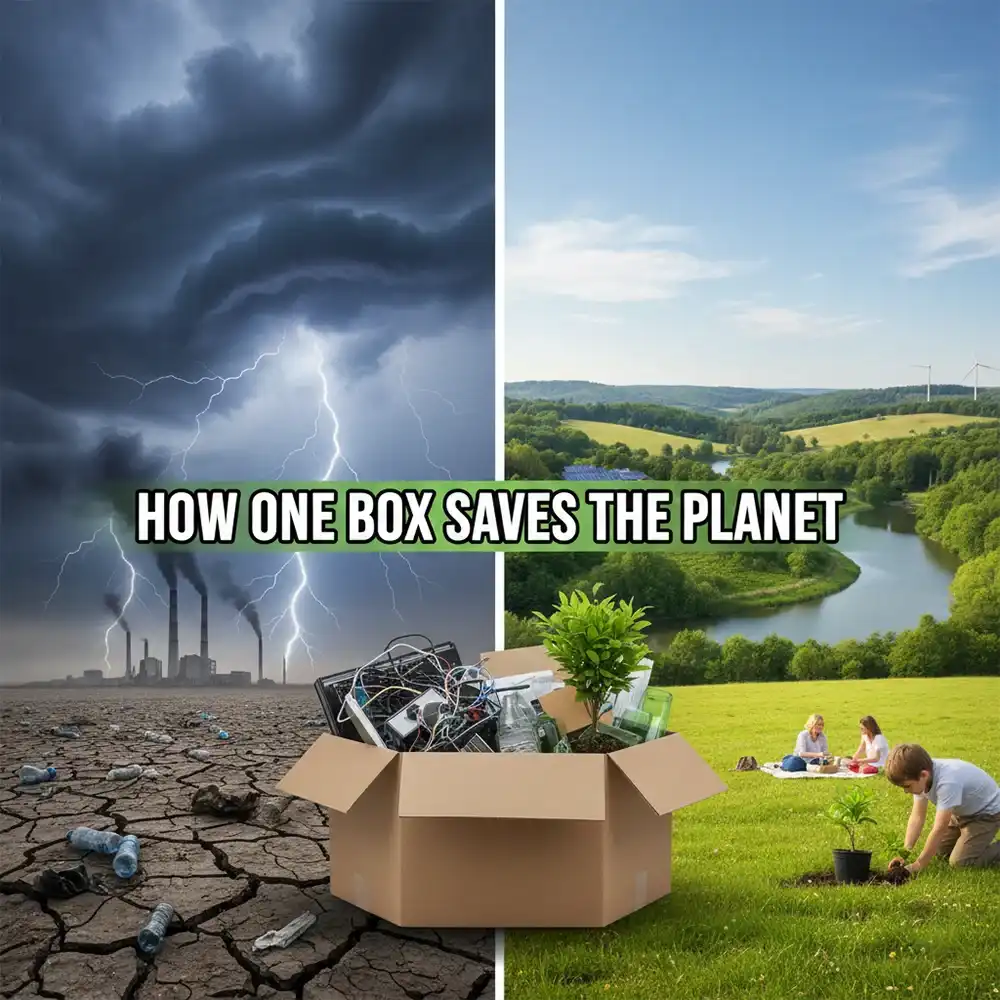
It goes beyond the wisdom of how one box saves the planet, but it is true. The impact of disposing of a Kraft packaging box is not monetary. It goes beyond just disposal; it creates a ripple effect that reduces landfill strain, maximizes energy savings, and helps make the planet greener. Everyone who is making an effort to save the climate is a hero, regardless of how much they are doing. According to research by the Environmental Protection Agency (EPA), cardboard contributes significantly to landfills. If brands and individuals dispose of or recycle the cardboard, they are slowing the rate at which landfills fill up, and that is relieving. You are taking steps to save the natural environment; you are a hero. You are a hero because you are helping preserve the natural climate and providing a healthy atmosphere for future generations. As a brand, you can use slogans, power words, and phrases to make people feel heroic by dropping a single box into a disposal bin.
If you’re tired of boring boxes and want packaging that actually sells, this guide is for you. Let’s break down how to get custom packaging for your small business.
Why Green Means Growth For Businesses?
Green is gold. Literally, for businesses, green practices, cardboard disposal, and combating climate change are highly beneficial. Sustainability is good for your bottom line, as we have mentioned before, people are becoming more eco-conscious than ever. When they find a brand that is showing its commitment to saving the planet, they start to trust it. That thing also influences their buying decisions, and your product sales go boom. According to a recent study, more than 73% of millennials are willing to pay more for products wrapped in eco-friendly boxes. So, you can easily get the ideas.
A brand committed to PCR packaging (Post-Consumer Recycled) not only earns its customers’ trust and loyalty but also cuts its packaging costs. They get dual benefits. If you are a brand that practices PCR packaging, you can save a lot. First of all, the manufacturing cost of this packaging is low, as the materials used are 100% biodegradable and reusable, and second, less energy is consumed in the manufacturing process.
In short, if you want to grow your business rapidly and achieve long-term success, you must adopt green packaging approaches and demonstrate your commitment to making the planet greener.
Million Dollar Question – Where To Find The Packaging Supplier Who Knows All About Green?
Not all packaging suppliers understand the importance of green, reusable, sustainable, and eco-friendly packaging. So, they do not even practice green manufacturing, yet never provide sustainable packaging solutions to you. Instant Custom Boxes is one of the few that know the importance of eco-friendly packaging. This is the packaging supplier with whom you will love doing business, as it uses 100% green materials and employs highly efficient, energy-saving design, manufacturing, and printing techniques. Besides, you can enjoy numerous packaging services, including free shipping, free design, no order limit, 30% discounts, quality assurance, and more.
Final Verdict
Climate change is becoming severe for our beautiful planet. Air and water are becoming dangerous to breathe and drink. Glaciers are melting so fast that sea levels are rising. Storms and floods are common these days, and it is all because of climate change. It’s our shared responsibility to fight for it and save the natural environment. We can do that as a brand or as an individual by using eco-friendly packaging materials, reusing product packaging, and properly disposing of it. In this way, we can not only minimize landfill waste but also combat climate change effectively to preserve the natural, healthy atmosphere of our beautiful planet.