Skip to content

This blog is going to be for professionals who would like to use mylar bags for their brands and the business owners who want to use such packaging. We will cover all the types of materials that you can use for mylar bags while covering the pros and cons of all of them. The main purpose is to provide you with a complete range of materials you can use for this packaging. Also, we will cover the customization options you can get with these. We will cover the different industrial printing techniques and the technical specifications you need to know. So, let’s start it!
Top Material Options for Mylar Bags
Understanding mylar bags for your products is something that depends on the materials you use for them. So, here are the best options you can have:
- The outer layer can be made with BoPET or PET, which is the shield of the bags.
- Then we have the middle layer that can be made of aluminum foil or VMPET, which is the barrier.
- The third layer is the inner layer that is mostly made with polypropylene.
General Material Options To Try
Apart from the different materials we talked about, there is a standard set of materials that can be used for mylar bags. So, let’s explore them:
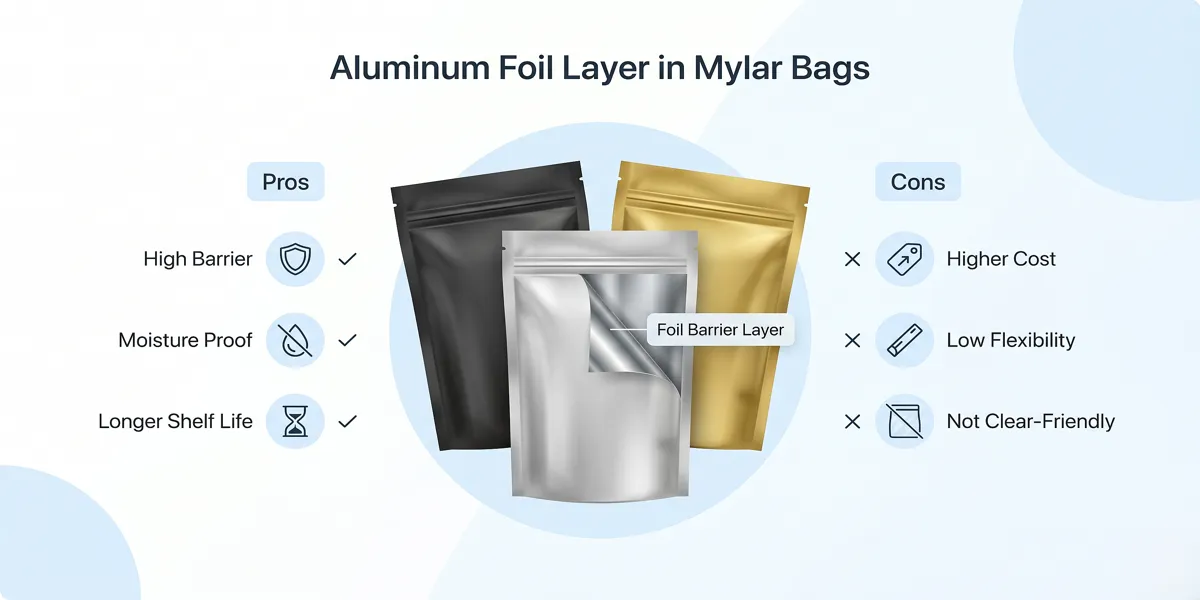
Aluminum Foil Benefits And Cons
When it comes to aluminum foil, there is a complete range of benefits you get with it:
- It is the best use if you’re looking for barrier protection against oxygen, light, and moisture.
- Its use also allows you long-term preservation, which allows items to be fresh for years.
- Apart from that, it is of perfect use when it comes to preventing content degradation that might come due to photo oxidation or moisture ingress.
Cons:
- On the other hand, it has been called expensive in comparison to alternatives like VMPET.
- Also, it is considered to be a bad option due to a lack of flexibility, which might also lead to flex cracking due to handling issues.
- Alongside that, it may not be the best option when it comes to products that require a transparent mylar bag.
The Outer Layer
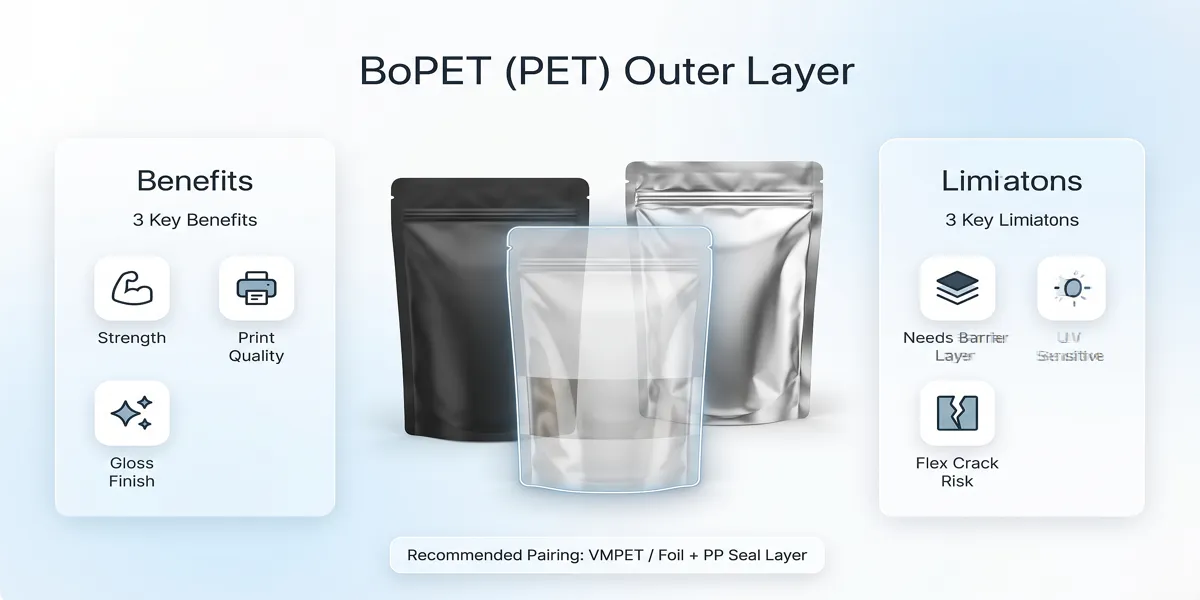
These bags require high tensile strength, which you can get with BoPET. Here are some benefits that you can get:
- When we use them for the outer layer, it gives perfect strength, which is normally compared to iron for its amazing intensity.
- Apart from that, you also get dimensional stability, which makes sure you get the toughness and stiffness you require. This also ensures that the bag can maintain its shape, no matter what kind of physical stress it may come under during handling and transport.
- Alongside that, you also get an environmental barrier with this material, which keeps the products away from moisture and air contamination.
- When it comes to the printability and surface engineering that this material offers, its high-resolution Ink reception is an outlier.
- At the same time, this material offers clarity and gloss, which makes the finish look premium and appealing to customers.
- You can also use them for thermal resistance, which makes the work so that they stay intact during the sealing process.
- This also allows you a wide temperature range it can bear, which gives you the ability to use it in microwave applications.
Cons of Using BoPET/PET for Mylar Packaging
Apart from the benefits you get with this material, there is a complete list of things you might have to face, like:
Issues With Barrier Properties
- It is considered to be a bad option if you are looking for an absolute barrier while using only this one. This means that trace amounts of oxygen can permeate inside it when products are stored for the long term.
- Apart from that, it is considered to be a material prone to light sensitivity due to its lack of protection against UV rays, leading to photo-oxidation and spoilage of products.
Heat-Sealability Issues
Also, you get:
- Using aluminum foil or VMPET to get rid of light sensitivity and gases effectively is a valid option to utilize.
- One of the core issues that we have with this material is that there is a requirement for secondary material, commonly leading to an inner layer of polypropylene. These two materials are used in mylar bags when you need air-tight seals.
Physical Limitations
- Among the other issues that you have with this material is flex cracking, which means the material can develop microscopic cracks if you fold and handle it repeatedly.
- Alongside that, if you have thinner variations, it varies susceptible to pin holes that would compromise the airtight and vacuum environment inside them.
- Also, it may not be the best option when you need a flexible hand feel for the customer’s touch as it is quite rigid and too crinkly.
High Costs of the Material
When you use this material for Mylar bags, you get expensive metal cylinder engraving. This means that printing on mylar bags with this material will be costly unless you use digital printing; otherwise, it is a petroleum-based plastic that is considered harmful to the environment.
Material Variations and Customization
There’s a complete range of customization and variation for the materials for mylar bags. Here is what you need to know about your BOPET and PET for this need:
- High-performance packaging that you wouldn’t believe also offers thermal stability for most retail goods.
- On the other hand, Kraft paper offers organic and earth-friendly properties and barriers that offer freshness.
- At the same time, VMPET and Aluminum Foil have the benefits of being lightweight and offering 100% barrier against moisture, oxygen, and light.
Kraft Paper For Mylar Bags
Another option that you have for making these mylar bags is Kraft paper, which comes with its own pros and cons. So let’s explore some of them:
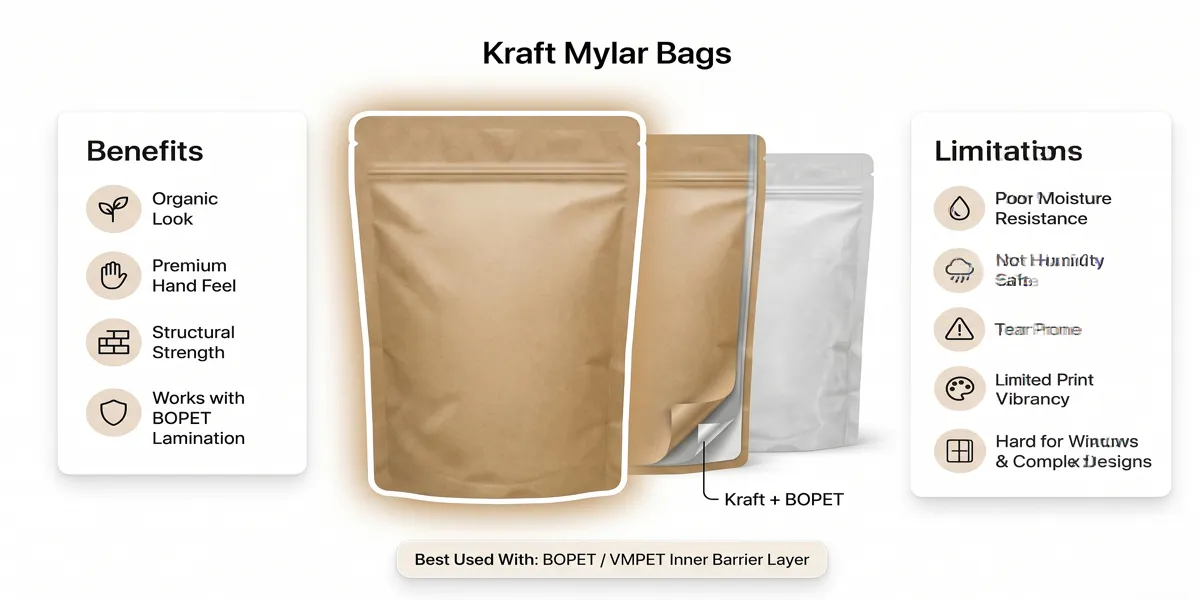
- One of the biggest benefits of Kraft paper is that it offers a perfect organic add earth friendly look for your mylar packaging.
- On the other hand, it is a great option to create a perfect hand feel that would make them stand out from plastic and other options.
- You also get structural support when you laminate it, providing the rigidity such bags require to stay on retail shelves.
- At the same time, you can add inner layers of BOPET that would provide successful lamination, helping the product stay protected even when the exterior is made of paper.
Cons of Kraft Paper
Before choosing Kraft paper for packaging, consider these disadvantages:
- It is not a good option if you want to pack something water-based inside. Also, it would not work in humid conditions, as it would lead to physical degradation of such packaging.
- Another thing that we have with kraft paper is that it is prone to tearing, which makes it unfavorable for heavy industrial needs.
- We get limited barrier properties as it does not offer active barrier properties, which are used to protect against elements like moisture, light, and oxygen.
- Alongside that, it needs lamination, as it will also need to have internal barriers.
- Also, adding customization to these boxes is quite complex, for instance, transparent windows.
- Due to the difficulty in printing and its complexity, they are difficult to print vibrant colors and intricate graphics.
Technical Specifications
When it comes to the tactical specifications of Mylar bags, there are some important things that you need to keep in mind:
- For measuring the thickness of mylar bags, you can use the units of melts and microns, which will allow you to understand the material dynamics. The common measurement and thickness range of these bags is around 3 to 7 mil, which is around 75 to 175 microns.
- When it comes to higher mil count, it offers better structural strength and endurance. This also means that they will be puncture-resistant and will work for hardware or dried food items that might have hard edges.
- On the other hand, if you want long-term storage and barrier integrity, the use of thicker films is offered.
- Apart from that, to have long-term food storage, the use of 5 mil thickness is the minimum requirement.
- A 5 mil threshold is also required to avoid strength issues during handling.
Printing Methods To Keep In Mind
No matter how strong your Maylar packaging may be, the need for printing is an essential thing you cannot deny. Here are some best options when it comes to printing such bags:
Rotogravure Printing
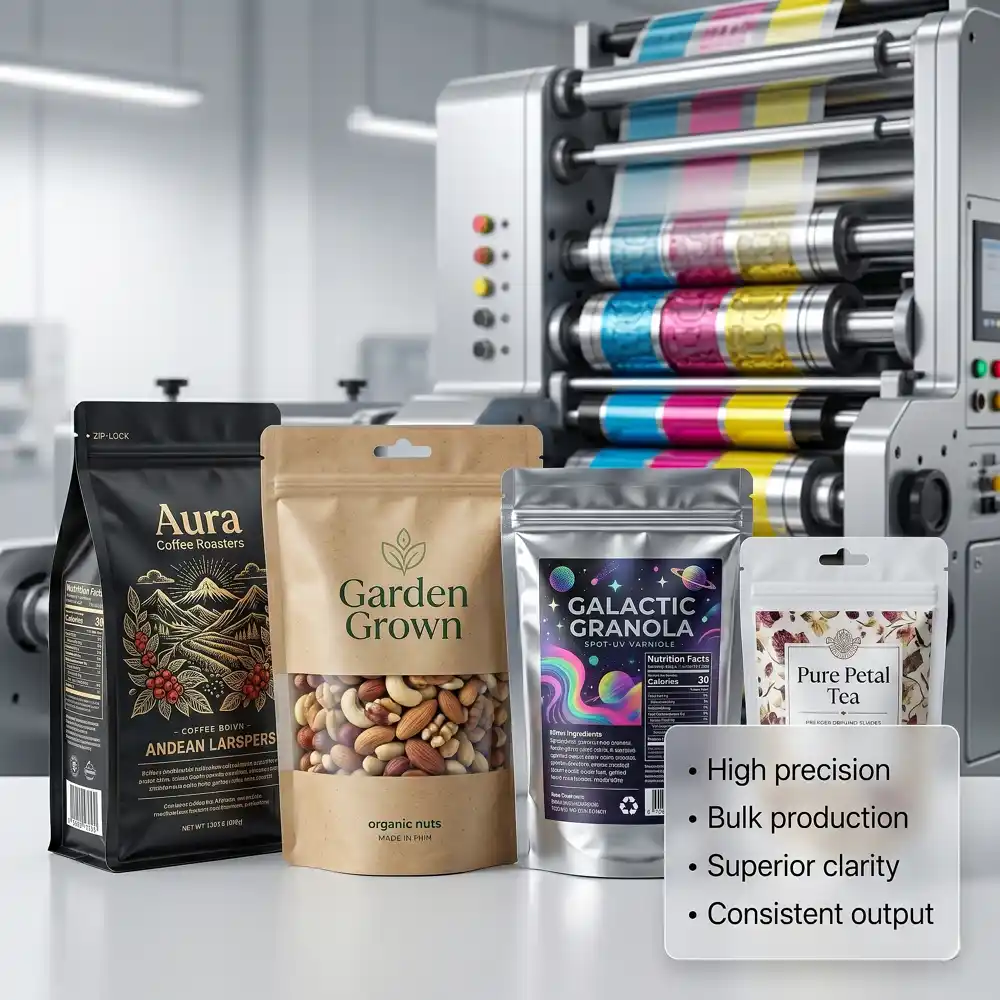
This option is a useful one when you want economic efficiency and need high-volume production. Its use also offers you cylinder engraving that allows you to meticulously engrave your desired design on all durable metal cylinders. Alongside that, you also get Superior resolution for your bags, offering absolute clarity in the printed image. It is also ideal for unmatched consistency, no matter how many units you produce.
Flexographic Printing
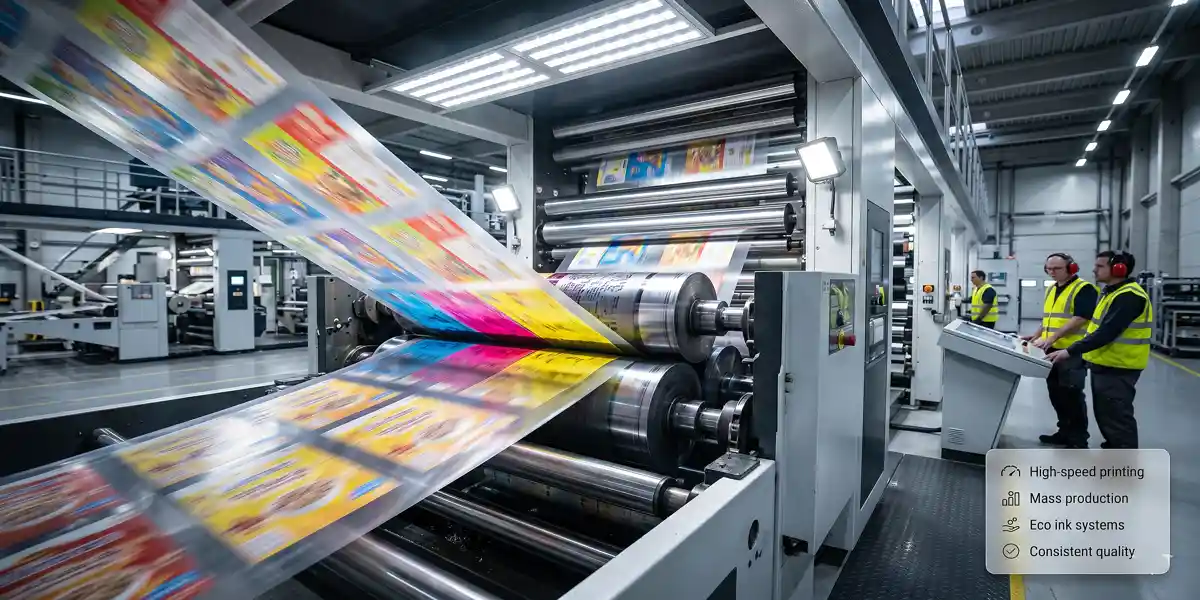
The use of flexographic printing has its own benefits, like its ability to wrap around cylinders, making the printing process efficient when it comes to multilayered mylar bags. Apart from that, you also get ink compatibility, which comes with UV durability and eco-friendly options like water-based ones. Also, this type of printing gives you better production speed and cost efficiency, which gives you high output speeds. Another advantage you get with them is the ability to produce consistent results even when velocity is high, which makes them ideal for mass-production retail packaging of mylar bags.
- Click to read more! Discover professional Mylar bag printing techniques and design secrets
Digital Printing
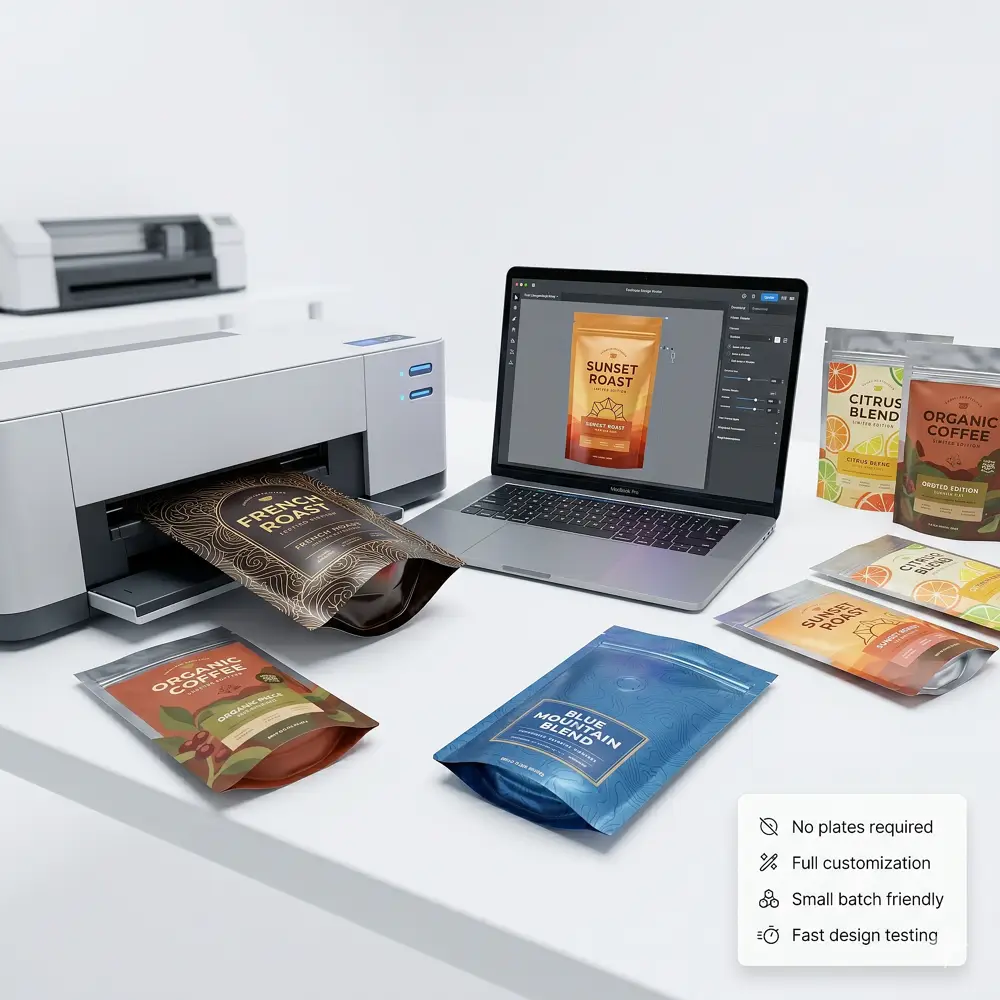 When we talk about digital printing, it is one of the most economical solutions for short runs. It is a plate-free feed technology, unlike other printing options, which means there is no need for physical plates, eliminating multiple reasons of setup costs. You can utilize this method for Mylar bags if you need a small order, making it quite cost-effective for such needs. It is a great idea if you are looking for strategic market testing where you want to test one branding design over product concepts without needing high-volume techniques.
You can utilize them for targeted promotions that give you flexibility for seasonal needs or a limited edition product launch you might have. One of the best benefits that comes along with this printing is high customization with adjustments to artwork and other options.
Instant Custom Boxes Takes You Ahead
With Instant Custom Boxes, you get the ability to print and produce the best mylar packaging. At the same time, we offer a 50% discount if you order in bulk with 100% free delivery. Apart from that, you do not have to wait for more than 8 to 12 working days for your Mylar bags to be delivered to your doorstep. So, why wait? Order now, and we will see you on the other side.
Conclusion
We talked about the best options when it comes to Mylar packaging materials. The materials we talked about were the ones that would help you improve your packaging results. Materials like VMPET, BOPP, Kraft, and others have their pros and cons. So, the main thing is to find the best options for your needs and let it be useful for your products, maximizing benefits and minimizing cons of it.