Skip to content

Packaging is an essential part of elevated branding, boosting the customer experience and improving the logistics capabilities. The concept of packaging is far greater than just protecting the inside product. Today, in a competitive modern market, brands and product manufacturers are looking for ways to make their products stand out and protect them for their customers. To accomplish the goal, custom boxes with inserts are the trusted solution.
Buckle up, we are going to explore how custom boxes with inserts can benefit your product packaging. How many types of these boxes are available, and what materials are best to manufacture these insert boxes?
How Custom Boxes With Inserts Can Benefit Your Product Packaging?
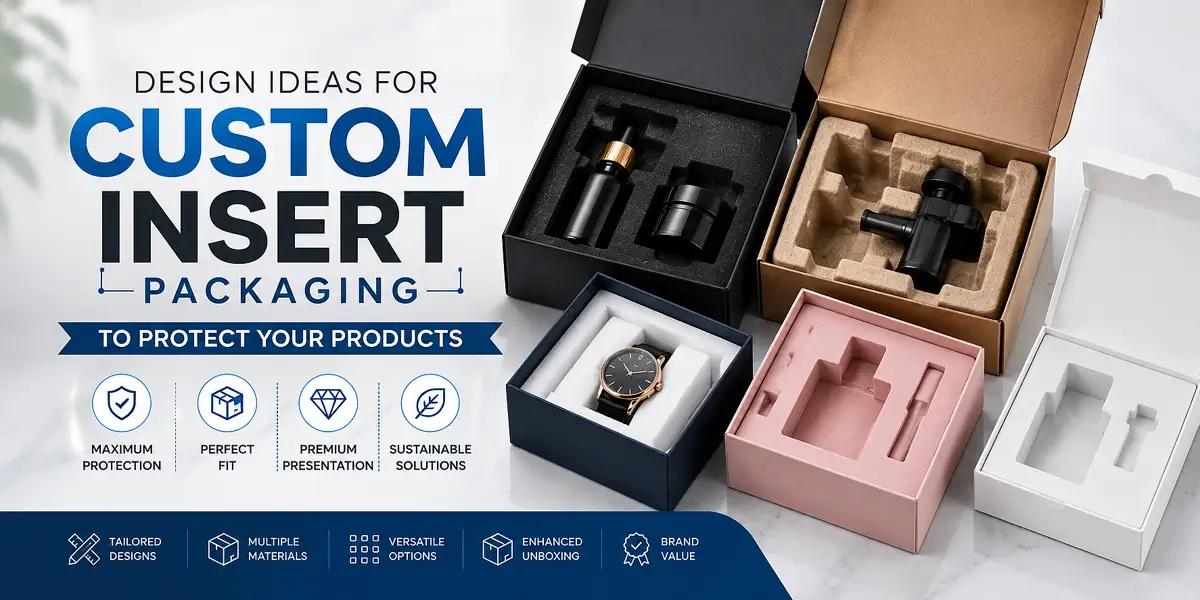
Primarily, the custom boxes with inserts are designed and produced to securely hold products. That ensures minimal product movement during handling in the storage and transportation. At first, it looks like a simple addition to packaging, but it improves it in many ways. Let’s see how custom packaging with inserts helps you.
First of all, using these boxes enhances your product’s protection. Inserts used inside the box to hold the product act as a cushion and a barrier. That thing prevents all the items from colliding with each other or the box wall. For delicate and fragile items, such as electronics, glassware, and luxury products, these boxes are best.
Then comes the product presentation. For a clean and organized product look, a well-designed box with an insert is critical for every box opening. That gives a memorable and exciting unboxing experience, as you are aware, for businesses, especially e-commerce, unboxing matters a lot.
That kind of packaging with inserts, you can reinforce your brand identity. These inserts can be customized in any color, size, and style. A professional, premium product appearance enhances customers’ trust.
Last but not least, improved customer experience satisfies customers and builds their trust in your brand. A neatly and undamaged product receipt from your customers reflects positivity about your brand and definitely encourages repeat sales.
What Are the Types of Custom Inserts?
Custom inserts are available in various types. There are many types of these inserts used for custom packaging that suit secure, elegant product packaging.
Foam Inserts
For high-value and delicate products, these inserts are the top choice. These inserts can be cut to any precise die-cut shape or size. Brands prefer foam inserts for their shock-absorbing properties.
Cardboard Inserts
One of the most cost-effective and eco-friendly options, cardboard inserts come first. They are easy to fold or cut and are generally used in retail packaging. These inserts are best for lightweight products and gadgets.
Plastic Inserts
Plastic inserts are used for modern packaging aesthetics and offer a sleek look to your product. These inserts are used for a wide range of products from electronics to food. But they are discouraged due to rising environmental concerns.
Molded Pulp Inserts
You need sustainable, recyclable, and biodegradable inserts, and then nothing is better than molded pulp inserts. Brands prefer them for their eco-friendly product packaging. You can achieve sustainable goals by providing your products with substantial protection.
Fabric Inserts
Protection with luxury is a need of the hour. Fabric inserts add a luxury touch to packaging. For high-end jewelry, watches, and gifts, these inserts are the top choice among brands.
Key Points to Keep in Mind While Creating These Inserts
There are some basics of creating the most fabulous custom boxes with inserts. You can get these boxes with inserts by following these key points.
- Product Dimensions and Fit
- Right Material Selection
- Branding Opportunities
- Ease of Assembly
- Sustainability
You must get the perfect custom boxes with inserts to reinforce your brand identity and ultimate product protection.
How Does Shipping Cost Reduce Due to the Usage of Custom Boxes With Inserts?
Although the boxes with inserts look expensive at first, they reduce shipping costs. The question is how? Let’s try to understand this phenomenon.
Minimal risk of product damage significantly reduces your costs. As a brand, you are well aware that product damage leads to returns, replacements, and refunds. All this enhances the operational cost and keeps your investment secure.
The use of inserts allows for an optimized packaging size that reduces raw material usage. The product fits inside the box, which enhances product protection. Reduced dimensional weight minimizes the shipping cost.
With these inserts, there is no need for extra protective materials. That saves a lot of your money and time. Also, packaging with inserts is easy to handle and stack. That reduces the risk of damage during shipping, which lowers the overall cost.
Best Material Options to Make These boxes with Inserts
The right material choice is necessary for experiencing the best packaging solutions with inserts. Here are some of the best material options for both boxes and inserts that brands must consider.
For Custom Boxes
- Kraft
- Cardboard
- Rigid
- Corrugated
For Custom Inserts
- Cardboard
- Kraft
- EVA Foam
- Molded Fiber
- Fabrics
- PET or PVC plastics
You can choose based on your preferences and packaging budget. It is also in your best interest to use first-class materials for custom product boxes and die-cut inserts. A right packaging supplier, such as Instant Custom Boxes, provides you with these custom boxes with inserts.
Final Verdict
Custom boxes with inserts are more than just traditional packaging. It is an upgraded version of custom product boxes. Having these boxes for their product packaging is quite a good investment. Your product remains safe, presents beautifully, elevates the brand, and minimizes shipping costs. Aesthetics and functionality are integral to any product packaging. With rising customer perception, packaging with inserts ensures product security, brand elevation, and a sophisticated product presentation. This type of packaging with inserts makes a big difference and enhances your brand’s perceived value.